
1134 LEARN · 2 MIN READ
Phase and the mono check
Understand what happens when related signals combine.
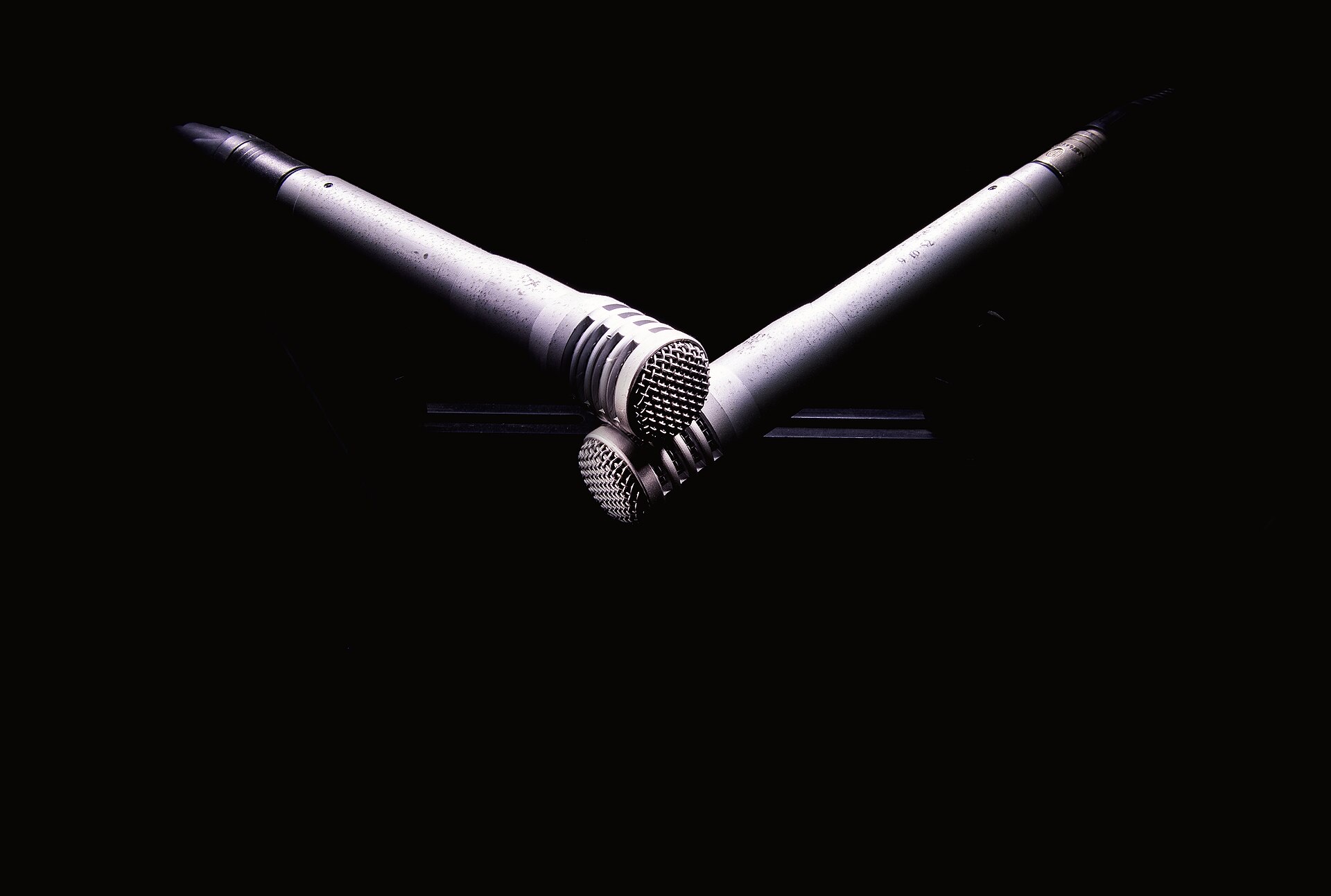
Think about timing
For a repeating wave, phase describes a position within its cycle. When related signals combine, their relative timing affects which frequencies reinforce or cancel. A delay produces a phase shift that varies with frequency. This is why moving a microphone or delaying one copy of a recording can change its tone, not just its apparent position.
Polarity is a different operation
Polarity inversion changes the sign of a waveform. For a single sine wave it can look like half a cycle of phase shift, but a polarity switch is not a general time-alignment tool. Complex recordings contain many frequencies and changing relationships. Two unrelated sounds do not behave like identical copies of one test tone.
What mono reveals
Summing left and right makes some channel relationships easier to hear. If a key part loses substantial level or changes timbre, inspect any widening, doubled paths or microphone combinations. A correlation meter can provide a clue, but a momentary negative reading alone does not decide whether a mix is wrong. Listen to the musical consequence.
Try it in a session
Choose a stereo passage with a clearly identifiable lead. Switch between stereo and mono while keeping monitoring comfortable. If the lead weakens, isolate the paths contributing to it and compare them. Avoid changing every track in response to one meter. Return to the full mix after each adjustment and verify both presentations.